Operation Safe Corridor logo

About the programme

About Operation Safe Corridor

The Federal Government’s programme for disengagement, deradicalisation, rehabilitation, and reintegration—aligned with national security and international best practice.

About OPSC

Federal non-kinetic peacebuilding, DDRR, and regional stabilisation at a glance.

Operation SAFE CORRIDOR (OPSC) is the Federal Government of Nigeria’s non-kinetic peacebuilding programme, conceived in September 2015 and operationalised in September 2016 to reshape the security landscape in conflict-affected states. Chaired by the Chief of Defence Staff and comprising over 17 Ministries, Departments, and Agencies, the programme was established to provide pathways for willing and repentant insurgents as well as other low-risk armed actors to disengage from violence and embrace peace. OPSC delivers a structured process of Disengagement, Deradicalisation, Rehabilitation, and Reintegration (DDRR), carefully aligned with national security priorities and international best practices.

More than a mechanism for disarming and transforming ex-combatants, OPSC is a central driver of regional peacebuilding. It reduces cycles of violence, fosters reconciliation, and rebuilds trust between communities and former fighters in Nigeria’s Northeast and Northwest. By combining psychological support, ideological re-orientation, vocational and educational training, and carefully managed reintegration, OPSC restores dignity, creates livelihoods, and enhances resilience at both individual and community levels. Through its holistic approach, the programme not only consolidates Nigeria’s counterinsurgency gains but also contributes to stability and lasting peace across the Lake Chad Basin and wider Sahel region.
Vision & mission

Purpose, direction, and the commitments that guide programme delivery.

Vision: A Nigeria where conflict-affected communities and former combatants achieve durable peace, reconciliation, and human dignity through accountable, humane pathways out of violence.

Mission: Deliver the Federal Government’s DDRR mandate by coordinating Ministries, Departments, and Agencies; restoring lives through deradicalisation, rehabilitation, and reintegration; and upholding national security priorities alongside international humanitarian and rule-of-law standards.

Governing structure

Strategic leadership, steering, and key stakeholders across government.

OPSC operates under the strategic leadership of the Chief of Defence Staff (CDS), who serves as Chairman of the National Steering Committee of OPSC. The Steering Committee includes key stakeholders such as:

• The Executive Governors of Adamawa, Borno and Yobe States

• Chief of Army Staff

• Chief of Naval Staff

• Chief of Air Staff

• Inspector General of Police

• Chief of Defence Intelligence

• Director General of the Department of State Services

• Director General of the National Emergency Management Agency

• National Coordinator National Counter Terrorism Centre

A multi-agency humanitarian platform

Partner institutions, MDAs, and the legal framework governing coordination.

OPSC is a joint, multi-sectoral operation involving 17 Ministries, Departments, and Agencies (MDAs), including:

• Office of the National Security Adviser (ONSA)

• Armed Forces of Nigeria / Defence Intelligence Agency

• Nigeria Police Force

• Department of State Services

• National Intelligence Agency

• Nigeria Correctional Service

• Nigeria Immigration Service

• Nigeria Security and Civil Defence Corps

• National Orientation Agency

• Federal Ministries of Humanitarian Affairs, Justice, and Women Affairs

• National Drug Law Enforcement Agency (NDLEA)

• National Directorate of Employment (NDE)

• North East Development Commission (NEDC)

• National Emergency Management Agency (NEMA)

• National Identity Management Commission (NIMC)

• Local support governance from Gombe State

The programme is conducted within the ambit of International Humanitarian Law and Rule of Law, ensuring accountability, transparency, and respect for human rights.

History and mandate

Origins, scope, and the policy foundations of Federal DDRR delivery.

From inception in September 2015 to operational launch in September 2016, OPSC has served as a flagship non-kinetic instrument of Nigeria’s security and stabilisation policy—linking federal strategy to field delivery in the Northeast and Northwest while contributing to wider regional calm around the Lake Chad Basin and the Sahel.

Its mandate is to offer structured exit from violence for eligible individuals, strengthen community trust, and complement broader counterinsurgency and peacebuilding efforts—always within a framework of International Humanitarian Law, domestic law, and respect for human rights.

Our Chairman

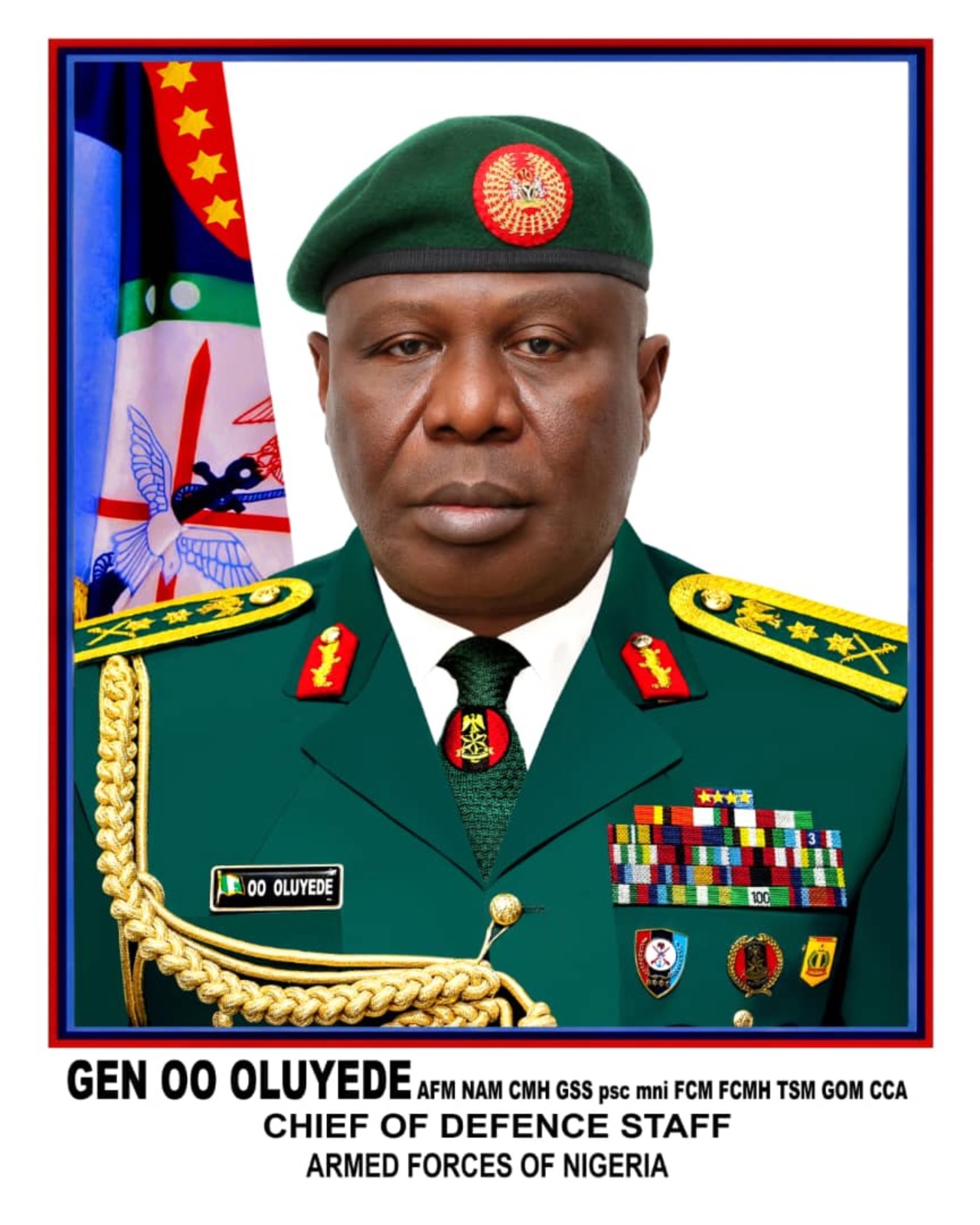
Chairman of the National Steering Committee — strategic oversight of Operation Safe Corridor.

Our Chairman —  General Olufemi Olatubosun Oluyede

Our Chairman — General Olufemi Olatubosun Oluyede

“At Operation SAFE CORRIDOR, we believe peace is possible, even in the most challenging environments. Every life turned away from violence and every community restored brings us closer to a safer and more united Nigeria. Through collaborative deradicalization, rehabilitation, mediation, and reintegration, we work hand in hand with communities, survivors, and former combatants to heal divisions and build trust. Our mission is not just to end conflict, but to replace it with opportunity, dignity, and hope for Nigeria, the wider Lake Chad Basin and Africa as a whole. General Olufemi Olatubosun Oluyede OFR Chief of Defence Staff and Chairman National Steering Committer of Operation SAFE CORRIDOR

Our Coordinator

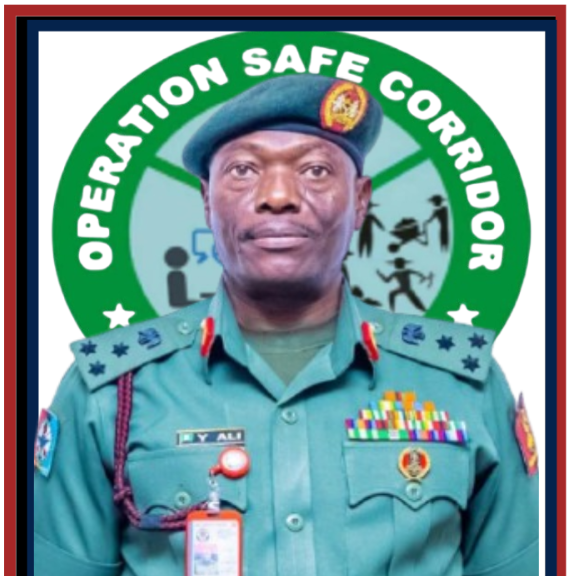
Day-to-day programme coordination and engagement across partner institutions.

Our Coordinator — Brigadier General Demo Coordinator

Our Coordinator — Brigadier General Demo Coordinator

Operation SAFE CORRIDOR represents Nigeria’s commitment to a peaceful and secure future for our nation, the Lake Chad Basin, and the African continent. We provide a structured pathway for those leaving violence behind by combining disengagement, deradicalisation, rehabilitation, reintegration, mediation, and negotiation to turn conflict into opportunity. Our work is not only about transforming ex combatants but also about standing with victims, rebuilding trust in communities, and creating the conditions where peace can take root and endure. Every life rebuilt and every community restored moves us closer to breaking the cycle of violence once and for all. The road to peace is never easy, but our resolve is strong. Together with our partners and the communities we serve, we will continue to drive stability, promote reconciliation, and make Operation Safe Corridor a model for non kinetic conflict resolution in Africa. Brigadier General Yusuf Ali Coordinator, Operation SAFE CORRIDOR